
bookgazing (![[personal profile]](https://www.dreamwidth.org/img/silk/identity/user.png) bookgazing) wrote2011-03-03 02:43 pm
bookgazing) wrote2011-03-03 02:43 pm
bookgazing) wrote2011-03-03 02:43 pm


Entry tags:
'Branwell' - Douglas A Martin
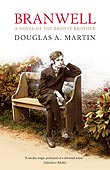 I’m definitely in one of those moods where I want to read everything right now and reading 'Branwell’ by Douglas A Martin did not help me cut down my reading options. Now I really want to go on a Bronte spree. Perhaps it’s time to brave my fear of Heathcliff drowning a puppy and crack of with ‘Wuthering Heights’. Does anyone know if there is puppy drowning in the Tom Hardy BBC version? Please say no.
‘Branwell’ is a piece of historical, literary fiction that mostly focuses on the only Bronte son, Patrick Branwell Bronte, from his early childhood to his death. As the only son Branwell is coddled. He’s kept home from public school for longer than the rest of the children and all the other members of the family channel their energy into making sure that as the boy he can pursue whatever he desires. This freedom comes with the heavy responsibility. He is expected to be good at something, exceptionally talented even and must progress quickly in his career so that he can one day support his three surviving sisters. The book moves around between two opposing views of Branwell: the layabout, drunkard whose inability to apply himself leads him to destroy his life and the young man who could have been a decent, regular man (or even possibly an artist) if only his family had encouraged him productively.
Branwell’s life and character is best understood by looking at the areas in which these two views intersect. Watching the young man grow up to be a decent, but ungifted portrait painter the reader sees that his family pushes him towards greatness without giving him the proper tools to first learn how to be great. They provide a studio, paint, freedom, but neglect things like a decent teacher and instruction in discipline. At the same time Branwell is given the money to go to London and enrol at The Royal Academy, but he spends his money on drink at a pub frequented by famous boxers and goes home a few days later to tell him family he’s been robbed. The reader can see that a balance of his own unwillingness to discipline himself and his family’s expectations undo him and the reader is often asked to sympathise with one person (Branwell, or one of his sisters) only to quickly be reminded that the other person also deserves sympathy. ‘Branwell’ is a novel made up of a continual struggle for understanding between a range of flawed characters and as all the characters are so flawed, but at the same time so sympathetic, the reader is kept from judging anyone too harshly, or picking a ‘hero’ character to support.
‘Branwell’ is a fascinating book, not just because of the personality that it investigates, but because of the effects produced by the stylistic elements that Martin uses to build this historical novel. The narrative voice is third person present, a choice that distances the reader from Branwell and distance proves to be just what readers of this novel needs. The reader needs to feel affection for Branwell, but Martin doesn’t need them to be entirely sympathetic to everything Branwell does. The novel seeks to avoid the cliché of Branwell as solely a tragic, misunderstood genius and third person narrative keeps the reader from falling completely under the spell of the way this novel shows Barnwell thought of himself (tragic, just about to make something of himself, destined for greatness, helped by drink). Somehow making the third person narrative predominantly present tense increases that distance, making Branwell a character who can be viewed objectively.
The use of present tense has the effect of making the narrative feel immediate and active, which is useful because Branwell’s live is racy, but often very inactive and the use of present tense narrative gives the novel much more pace. The Publishers Weekly review quoted in the front of the book talks about the novel’s large use of ‘declarative sentences’, for example in passages like:
‘They will have to work. Emily was not to marry. Nor Anne. Nor their brother. Only Charlotte, who would one day be in a position, when they were all gone, to speak for them all.’
This stylistic choice again increases the active feel of the narrative. It also makes the novel’s examination of Branwell feel like a factual historical account, even though many of the declarative sentences deal in psychological details and assessments that historians would struggle to find evidence for. The use of the future tense in some of these declarative sentences lends a prophetic quality to the novel, which again reminds the reader that while they are involved in Branwell’s story they’re at the same time distanced from it by history. Their emotion at the content of the story doesn’t mean they have to ignore their ability to judge Branwell’s behaviour objectively. So Martin’s choice of narrative style, devices and sometimes even tenses creates these different reactions in the reader, who moves between active emotional connection, and objective, distanced judgement.
At the same time it’s frustrating that sometimes this book takes the complexity of its style so far that it blocks the readers understanding (and doesn’t that make me sound uneducated and what follows is probably going to show my up for my seriously basic grammar knowledge). What drove me off my hinges was the use of so many different tenses within pages, or sometimes just within paragraphs, of each other. Present tense, past tense, future tense:
‘His father wants to take the boy’s mind off all these things he goes silent under’ (Page 16)
‘Then their father wanted all of them back home…’ (Page 17)
‘They would spend the next six years all home together…’ (Page 17)
can all be found in close proximity to each other and seem to be applied to describing different characters actions with no consistent strategy. Often the use of so many conflicting tenses ends up confusing the structure of the book and distracting the reader from the meaning of the text. Sometimes the tense will switch in the middle of a sentence, for example ‘They are too fond of fighting, even themselves, when they felt so threatened’. And sometimes sentences just feel like they are constructed the wrong way round, so that their sense is distorted, for example ‘Everyone he tells her husband is dying and how he’d seen him treating her horribly’.
When used in conjunction with a general writing style that is disjointed and approaches a third person stream of conscious style, the frequency of tense changes and unusually arranged sentences, seem deliberate attempts at literary experimentation, but just because they can be claimed as experimental devices, that doesn’t mean they work to enhance the novel. It’s often quite hard to discern a reason for the continual tense changes. I’m going to take a view that they’re designed to increase the readers uncertainty about what can be pinned down as truth and maybe to reflect the general confusion of Branwell’s mind and life (although I’ve got to credit that idea to my mum). My main conclusion is that it can be quite hard to progress through this book the book if you’re determined to puzzle out what the point is of all the different tense changes and in my view, you’re best just barrelling through this stylistic touch if you want to finish and enjoy ‘Branwell’ (yep I think I’ve officially crossed the line into literary heathen now).
From what I can gather from Wikipedia (I know, sooo reliable) ‘Branwell’ is also a work of revisionist historical fiction, as it argues that Branwell was not sacked from his tutoring job at Throp Green because he was having an affair with the master’s wife, but because it was believed he was having sex with his eleven year old pupil. Martin cheekily never confirms this theory, in fact he even gently mocks the readers need to know the truth:
‘Dear Reader, you want to be told now that you’ve understood. That he might be doing just what you think he might be, and in just what way. You want to be sure.’ .
He heavily suggests that Branwell’s pupil, Edmund Robinson is gay and that he is infatuated with his tutor. He makes it pretty clear that Branwell is attracted to men. Any portrayal of consummation is always deliberately indistinct and although readers will come away with the impression that Branwell has slept with men, clear phrases are never used to describe his relationships with men. The true extent of his relationships is clouded by the ambiguous literary style in which they are described, which means the reader must speculate about what the words really mean and about who is involved as these things are never clarified in the text. Yet at the same time the particular words that describe his meetings with grooms in the stable, or his feelings about his friend John Brown encourage the reader to speculate in one particular way. I don’t think Martin ever intends there to be space in this narrative for the reader to doubt whether Branwell is having sexual relationships with men, but he draws back time and again from showing a clear, uncontested image of Branwell sleeping with a man.
Martin takes a similar approach to writing about the alleged affair Branwell has with his pupil. Readers know that Branwell takes his charge down to the stables, which is the site of male, servant society at Throp Green and this male society is linked to hints of eroticism and sex. However, details are obscured and multiple, unclear versions of events are included so that it’s never clear if Branwell takes Edmund to the stables to sleep with him, to show him what happens in the stables (knowing that the boy needs someone to help him understand his sexuality) or if Branwell and the grooms try to keep him from the stables. Martin also inserts other complicating factors to confuse the readers judgement of this situation. Other characters construct a judgement about why Branwell is dismissed. Anne thinks she’s seen Branwell kiss the boy, Edmund’s father believes he’s been interfering with his son and Branwell’s narrative admits that he will have to create a fiction about why he was dismissed (he creates ficticious letters from the boys mother, Lydia Robinson) which all lead the reader to think they know exactly what went on. At the same time Branwell’s innocence is insisted on in a series of flashbacks that could be construed innocently, or lasciviously. Then there are the little details which could change the entire way the reader interpret events if they choose to let them (the gardener who was also dismissed shortly after Branwell, Branwell lingering outside Mrs Robinson’s door, one of the grooms who has ‘lost his way slips out of one of the other rooms’ just as Branwell is leaving the house).
Not being a Bronte devote I don’t know if Martin chooses to avoid making Edmund and Branwell’s relationship definitely clear because there isn’t any evidence for it and so the literary style of obscuring the definite fits well with Martin’s revisionist strategy, or if he just favours this literary style for artistic reasons. I do know that Martin has created a piece of literature that makes me believe in the whole Branwell that he presents and that encourages me to sympathise with his character, without having to forgive him all his faults. I felt for him because he deserved sympathy, but at the same time I felt like I got a decent perspective on just where the limits of my sympathy should lie (I don’t think I’m ever going to be totally sympathetic to someone who may have slept with such a young child, no matter what time period a book is set in). He wasn’t all bad, but he had some serious faults and they weren’t all created by the rather bad upbringing of his family. I think Martin does a good job of showing that pressure doesn’t take away your own agency and having agency doesn’t diminish the pressures you feel. I will grant that the expectations Branwell finds placed on him in this book do not help him and maybe he could have become a great man, or at least a good man, without such unrealistic pressures, but no one made him pick up that bottle again and again.
As Martin is so even handed in his treatment of Branwell I find myself more willing to open my mind to the possibility that Charlotte’s actions towards the end of her brother’s life might not have been exactly generous. I do feel like there’s an increasing bias towards Charlotte that grows as the book approaches its end, although Martin does include prophetic snippets in earlier parts of the book to show Charlotte’s support for Branwell’s work after his death. The increasingly stern, self-preserving picture of Charlotte that Martin creates in the final pages of the novel means that readers can’t be sure if she genuinely rated her brother as an artist, or if she was just perpetuating this myth to help the family. This is just another example of the uncertainty that Martin creates which makes this book so enjoyable and tricksy.
Does anyone have any further recommendations for historical fiction that is written using literary fiction techniques (obviously I need to re-read ‘Wolf Hall’ when the sequel comes out, but what else). It is World Book Day, I can indulge my massive wishlist by adding a few new titles.
PS. Turns out Douglas A Martin has written about The Lost Boys which is only my favourite Kiefer/vampire/80s movie evah. Oh if I could find that work I would be the happiest lady!
