
bookgazing (![[personal profile]](https://www.dreamwidth.org/img/silk/identity/user.png) bookgazing) wrote2011-02-11 12:22 pm
bookgazing) wrote2011-02-11 12:22 pm
bookgazing) wrote2011-02-11 12:22 pm


Entry tags:
'Motherlines' - Suzy McKee Charnas
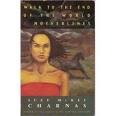 I have proof that The One Show teaches. There is Miranda (yes I admire Miranda, one of my heroines is from The One Show team ok) swimming around looking at seaweed and bam she starts talking about how large areas of seaweed are called holdfasts. A little research later and I discover that a holdfast is a root structure that plants, including seaweed, use to fix themselves to rock. Suzy McKee Charnas’ 'Walk to the End of the World’ was set in a place called The Holdfast, where the main crop was lammins, a type of kelp. Aaah, I see.
That little fact popping up reminded me that I’d still got to read ‘Motherlines’, the sequel to ‘Walk to the End of the World’ and that I wanted to read something for Carl’s Sci Fi Experience and...well you know how the roaming mind goes. Suddenly you’re opening a sci-fi book while finishing a little conversation in your head about hamsters in space.
Alldera, the fem who escaped the male dominated Holdfast society at the end of ‘Walk to the End of the World’, has made it into the Wild as the Holdfast collapses in violent chaos. She has been tasked by the Matris, the controlling force within fem society, to find the free fems they believe live in The Wasting and bring them to The Holdfast to liberate all fems.
Alldera doesn’t find free fems, but she is eventually rescued from starvation by female characters. Upon entering the Wild Alldera realises that she is pregnant by one of the male characters who raped her in the first book and although she tries to lose her cub, it clings on to life. Her strength begins to fail as she can’t find enough food and just as she’s almost dead women appear on horseback to help, but they’re not the free fems of Holdfast legend. They’re women, descended from a line of females who kept themselves out of the bunker that select men and women fled to during the apocalyptic events referred to in the Holdfast creation story and found another way to survive. Their different lineage means that women regard themselves as apart from the fems. Women have never experienced male oppression. They did not escape The Holdfast society as slaves, instead they grew up outside the society as free women and have never known rape, or male control. To them the history of the fems appears a history of femish co-operation in their own oppression, which causes them to view females as lesser female beings; ones who don’t take control and substitute dreams for action.
While the women’s society is clearly framed as utopian, it initially seems that the women’s views on fems will limit the way that Alldera benefits from this utopia. It appears she has swapped life as one of the unmen, to become an unwomen, viewed as lesser and at time rather primitive. Shell, one of the women who picks Alldera up in the desert and consequently becomes a sharemother to her child (the children of the womens society have multiple adopted mothers, as well as a biological mother), views her as lesser and contemptible. While being thought of as less in the women’s society carries far less violent consequences than being thought of as less in the male society of The Holdfast, her exclusion still affects Alldera. She gives birth to a daughter, who is to be raised as a child of women, not fems; she takes a lover among the women; she learns to ride (an activity which is a huge part of being a woman, as the women feel close bonds with their horses) and makes an effort to assimilate herself into their culture, but she is still excluded. She can’t attend the Gathers the women celebrate at, she isn’t allowed to ride to fights with other groups of women and she’s forever reminded that if she balks at aspects of the women’s culture, that she just doesn’t understand properly. At the same time there are parts of her fem life that she can’t cut out, or doesn’t want to. The women don’t understand why she wants to hang onto anything from the days of her oppression, because they’ve never been oppressed. Having grown up in freedom, they’ll never really know how they would have reacted to the violence the fems faced and Alldera finds the way they talk about fems frustrating as they using language which demonstrates how little they understand the situation in the Holdfast:
‘ ‘In the morning two fems were found frozen, hugged in each others arms by the gate. They must have hoped to get at the soup pot first in the morning. Mother Moon, how my master lit into the young menin charge of the fems for putting his trained runner in danger of freezing to death!’
Nenisi said, ‘Why didn’t all you fems break into the hall and throw the men out to freeze?’
There just wasn’t any point in trying to explain. Alldera turned over and tried to sleep.’
Alldera finally breaks with the women after she watches them cull horses they’re personally attached to, for the good of the collective. She then finds out how the women’s society reproduces (let us just say bestiality and some wild science) and she moves in with a group of free fems who trade with the women (it is interesting that the women always said there were no free fems until Alldera saw them). She leaves her daughter behind with the women and tries to make a new life. Unfortunately what she finds at the fem camp is a recreation of the structures of male Holdfast society. A few high power fems control a hierarchical society, which is full of struggles for power, bargaining for favours and oppression. The fems live on dreams of glory, fuelled by The Plan to return to Holdfast and defeat the men.
Suzy McKee Charnas has set up societies that operate on opposing principles to each other. The two groups of female characters represent two schools of feminist thought. The fems dream of taking what the men have created, while the women have created a new way of life that operates outside the constructs of the male, Holdfast culture and don’t see any need to reclaim an old society. At first glance the women’s way of life seems the most progressive, it appeals to feminist ideas that refute the validity of reclamation and instead frame this approach as operating within the patriarchy. The fems fantasies of retaking The Holdfast, have led them to recreate the oppressive structures of the men seeming to confirm ideas that dreams of reclaiming existing culture leads to people taking on the oppressive characteristics of that culture, but it’s important to note that in ‘Motherlines’ both female societies significantly conflict with Alldera’s own vision of what a perfect life, free of men, should contain. In a perfect world she would not be required to share her lover Nenisi with others for the good of the community and women would not engage in bestiality to reproduce. In a perfect world fems would take action, rather than creating unrealistic dreams out of misguided nostalgia and fems would not emulate male, oppressive structures. The women seem as flawed as the fems, although the fems flaws tend more towards violence and division than the women’s do.
Alldera clashes with both female communities and eventually moves to live with an older, religious fem who makes medicines out in the desert. There she learns to make her own life, independent of a community, by starting again and collecting wild horses to ride. At first I thought that this was McKee Charnas’ way of indicating the flaws of all collectives, distancing herself from decrying the flaws of a particular school of feminist thought, but what follows afterwards seems to disprove that. Alldera takes her former fem lover, Daya and rides to the women’s camp, where her daughter is due to ‘come out’, emerging as an adult woman. Now she slots back more easily into the women’s community, admitting to Daya that the flaws she saw in them were really in her, that she ‘demanded too much of them’ while remaining wary of fems as they begin to desert their leader and follow her to the women’s camp. She even tries to force the same restricting measures on fems, that she railed against when she first lived in the camp by explaining that ‘fems would be more useful taking over camp duties so that more women could go after sharu.’ . The women remain distressed about the way the fems live in their society, as they cordon off their own areas of tents (in a society where everything apart from horses is pretty much collective), steal and continue to tell stories of oppression that the women think they should let go. The fems are not a positive group and it appears that McKee Charnas is showing that fems can never be as worthy as the almost god like women.
There is a huge problem with this approach, because the things the women object to about fems, are direct consequences of them having been victims of the male society. Fems steal and partition because they never owned anything in The Holdfast. They tell stories from the old days to explain what they’ve been through, to form community and to pass on the rage at male society, in the hope of inspiring action.
But ‘Motherlines’ is a novel of progression which explores many extreme opinions and then incorporates parts of them into the beliefs of those characters who are still on a journey to a determined position, before arriving at the mixture of views it wants to wholeheartedly support. Readers have to trust the novel will get them somewhere you want to be and McKee Charnas has to work to keep readers engaged with the characters and the story, to encourage them to reach the conclusion which shows the final, more sympathetic way that many of the characters react to fems. Her detailed character creation, descriptive writing and fluid, interesting dialogue are designed to keep readers engaged with the story telling, sci-fi aspect of the novel, when they might have given up on a novel that uses its characters, plot and environment as pure ciphers for ideas. Readers will analyse the politics as the read, but I believe it’s the stories of individuals like Alldera, Shell and Daya that encourage reading.
The reasons I find myself so happy to trust the novel, are partly tied up with my experience of Alldera in ‘Walk to the End of the World’. I have faith, which is encouraged by previous experience, that she’s a heroine whose views will at least meet mine in the middle, even if we don’t think the same way about everything she experiences. But it’s also the humanity of the world and the characters that makes me adore this book and trust it to take me somewhere that won’t have me throwing it across the room. I know that’s kind of a false idea, detailed characters that you care about and writing that smoothes your way into a different world do not always result in happy, political alliances between reader and book. There’s something about McKee Charnas’ style of writing, of creation even, that makes me feel secure. I feel that the story she gives to me will be compassionate (yes despite any violence and blood, writing can be compassionate while the story is aggressive and kills a bunch of people) and thoughtful, not a head on assault that tries to make me agree with her book. I feel free as a reader when I’m reading her stories, as if I’m having a long, satisfying discussion, rather than an unproductive wrestling match.
The fems begin to work more co-operatively within the women’s society, without assimilating completly, as it’s clear the women hope they will. They move into their own tent, they take up riding and learn how to be warriors, but they do so, in order that they can march on The Holdfast, they continue to tell their own stories. And while Alldera still feels uneasy about the fems need for war and their adoption of her as a leader and the women still find themselves superior to the fems, both must admit that the fems have begun something new, something better than the broken, femish society they had replicated from The Holdfast:
‘Even Sheel, unwilling as she was had to admit to herself that the longer they lived here in the camp the more their slavish ways feel away from them. Everyone noticed that they all quarrelled and intrigued far less…’ .
Does this ending suggest that there is an admirable difference between being co-opted into a culture and co-opting parts of a culture for your own ends? Does it suggest a need for some females to forge their own way, even when there is a seemingly utopian female society to fit into? I’m not sure. To some extent I think the answers are dependent on the rest of the books in the series and how the fems ultimately end up. What I do think it does is, allows room for dual approaches to feminist actions and suggests different, ways for women to act in response to oppressive male culture, which are valid despite their flaws.
As I mentioned in my review of ‘Walk to the End of the World’ there is so much more to discuss in these books than I could ever fit into a review, or that I can confidently explore. I would be fascinated to see some literary criticism on this book (especially racial commentary, as the women’s society in ‘Motherlines’ seems to be based on commonly held ideas about early Native American society and searching around the internet, I found that the title ‘Motherlines’ suggests a connection with Native American culture) but most of it seems to be in essay collections, rather than online. Until I can find them in a library I’ll have to make do with this exchange between McKee Charnas and a reader and pick up the third book in the series as soon as my book acquisition ban is over.
