
bookgazing (![[personal profile]](https://www.dreamwidth.org/img/silk/identity/user.png) bookgazing) wrote2010-10-06 08:04 am
bookgazing) wrote2010-10-06 08:04 am
bookgazing) wrote2010-10-06 08:04 am


Entry tags:
'The Tapestry of Love' - Rosy Thornton
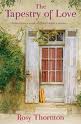 Like her previous novel 'Crossed Wires’, which I reviewed last year, Rosy Thornton’s newest novel, ‘The Tapestry of Love’ includes some of the standard conventions of the romance genre. There’s a love interest, a romantic misunderstanding and a happy ending. Like ‘Crossed Wires’ it’s also a novel that is interested in showing romance growing in the lives of real characters in the middle of lives preoccupied with other important aspects of live. The heroine of ‘The Tapestry of Love’ is a middle aged English woman called Catherine Parkeston, who has moved from England to a cottage in the remote Cevennes mountains to set up a soft furnishings business. She leaves behind a friendly ex-husband, two grown children and a mother with advanced Alzheimers. She begins to settle into the small community of neighbours who also live outside the nearest town and to make a close friend in Patrick Castagnol, a dashing local landowner. Patrick looks a likely romantic interest for Catherine, but when her corporate, career driven sister Bryony comes to visit she begins her own romance with Patrick. When Bryony decides to take a sabbatical from her job Catherine doesn’t object to her sister pursuing a romance with her friend.
I keep wanting to describe ‘The Tapestry of Love’ as the perfect book for a very rainy day. It’s very relaxing and entertaining to read. It’s also smarter and more observant of the details of human interactions than that line might suggest. Rosy Thornton uses such a subtle, natural touch when she writes her characters and the world they live in, that the result feels emotionally real, but never crosses into the kind of claustrophobic, happy or sad intensity that I so enjoy, but must take in small amounts to avoid over dosing. Thornton isn’t really aiming to expose her characters if that makes sense. She seeks to depict all of Catherine’s different interests and thoughts to create a character that isn’t always simple to categorise, but is open for readers to investigate. She describes the details of Catherine’s surroundings in a similar way, so that readers are aware of the contradictions and layers of the Cevennes mountain landscape but never really feel as if they can firmly know everything about the mountains. There’s always the sense that there is more to explore about the characters and the landscape, without any frustrating obscuring fuzziness being put in the way to make character or landscape deliberately mysterious.
Thornton wants to delve into her character’s feelings to a significant depth, but she perhaps doesn’t feel the need to peel back all their defences. Perhaps I’d call Thornton’s method of presenting her character’s emotions the happy, healthy type of typical British approach to emotion (as opposed to that horrible national stereotype of us all being uptight and unfeeling), where someone wants to understand other people, but also wants to allow them a measure of privacy and the freedom to pleasantly deceive themselves as long as their deception isn’t harmful. Her character Catherine certainly believes in this way of relating to people, as she allows both her children the space to come to her in their own time and allows her daughter Lexie to deceive herself about what a new job at a special interest magazine might offer despite wanting to offer her advice about her career. She doesn’t prod Patrick to reveal his past, or push her French neighbours into forming immediate relationships with her when she arrives. Her reward is deep friendships which develop over time and children who eventually reveal their loves and hopes to her of their own free will. Maybe I’m projecting how I can see the main character relating to other people, on to how Thornton approaches presenting her character’s emotions, but it certainly feels like there’s a connection to me – that Thornton wonders if people need to be entirely exposed and analysed to feel knowable.
Having read ‘Crossed Wires’ I consider characters Thornton’s strong point character development, while her plot development and resolutions can be rather uninventive. The happy ending in this book is achieved by a few rather convenient saves that allow Catherine to go after romance and continue to run her business. The plot’s resolution is obviously contrived, but this reader wasn’t bothered by that flaw. The characters I cared about got the emotional payoff I wanted for them. This is one of the few novels where I can really say I would have been emotionally disappointed if there hadn’t been a happy ending, instead of being sad but emotionally rewarded.
I suspect I keep thinking about reading this book while it rains because the rainy season in the novel’s Cevennes setting is such a force. The landscape around Catherine’s cottage and the descriptions of the seasons adds a rich feeling of sensory detail to the novel. And the sensory detail extends into the descriptions of the tapestries Catherine produces, the meals she eats and the animals she sees around her cottage. I could picture the tiny wild boar piglets she eventually sees and the sheep taking part in the transhumance (traditional herding of sheep to different pastures).Thornton’s remote France is a comforting place to spend hours, because of all the thick smells, tastes and weather she writes into the location, which wrap around you as you read.
‘The Tapestry of Love’ is not like a lot of books about English people moving to a foreign country, which frankly I now avoid as if their covers will scald me. There are moments when Catherine is baffled by French procedure, homesick and confused about her relations with her neighbours, but the book doesn’t swing from tragedy to comedy in an effort to convince the reader that a personal journey to set up home and business in another country is exciting. Instead it lays out the contents of Catherine’s small adventure and lets the reader decide for themselves that it is exciting to watch a gentle, thoughtful person’s life unfold before them. If you’re in the mood for some kind, but robust and sensible fiction about moving on, making new connections and starting again in a foreign country then I’d recommend investigating this novel. Thanks to Rosy Thornton for sending me a copy to review and apologies for putting it up later than I said I
would.
Other Reviews
Litlove
Iris on Books
Jenny's Books
Charlotte Otter
Vuples Libres
Dot Scribbles
Of Books and Bicycles
So Many Books
The Zen Leaf
Telecommuter Talk
